Good convention marketing starts long before the doors open, and it carries on after the last cosplayer heads home. Anime and cosplay conventions run on community, and most are organized by small teams with day jobs. So the aim is to do a few things well, at the right time. Here’s the plan I’d follow, phase by phase, along with the channels that suit fan conventions best.
Why convention marketing is different
A convention happens once a year, so interest rises and falls around a single weekend. You’re also talking to several groups at once: attendees, artists and vendors, guests, sponsors, volunteers and the press. Each group needs different information at different times.
On the other hand, fan communities love to share. Cosplayers post their builds, artists promote their tables and guests tell their followers where they’ll be. Good convention marketing gives all of them something worth sharing.
Build your convention marketing on a home base you own
Social platforms change their rules, and your reach can drop overnight. So start with the two things you control: your website and your email list.
Your website
Your website is the one place where the details are always right: dates, venue, badge links, guests, the schedule and your policies. Because of that, every post, ad and email should point back to it. My guide to business website design covers the pages a convention site needs and how to make badges easy to buy.
Your email list
An email list reaches people without an algorithm in the way. Add a sign-up form to every page, and give people a reason to join, such as first access to badges or guest news. Then keep separate lists for attendees, vendors and artists, and volunteers, so each group only gets what’s relevant. Also ask for permission and include an unsubscribe link in every message. The FTC’s CAN-SPAM guide explains the rules for marketing email.
A convention marketing timeline, from announcement to afterglow
Timing matters as much as the message. The five phases below repeat every year, so adjust the pace to suit the size of your event.
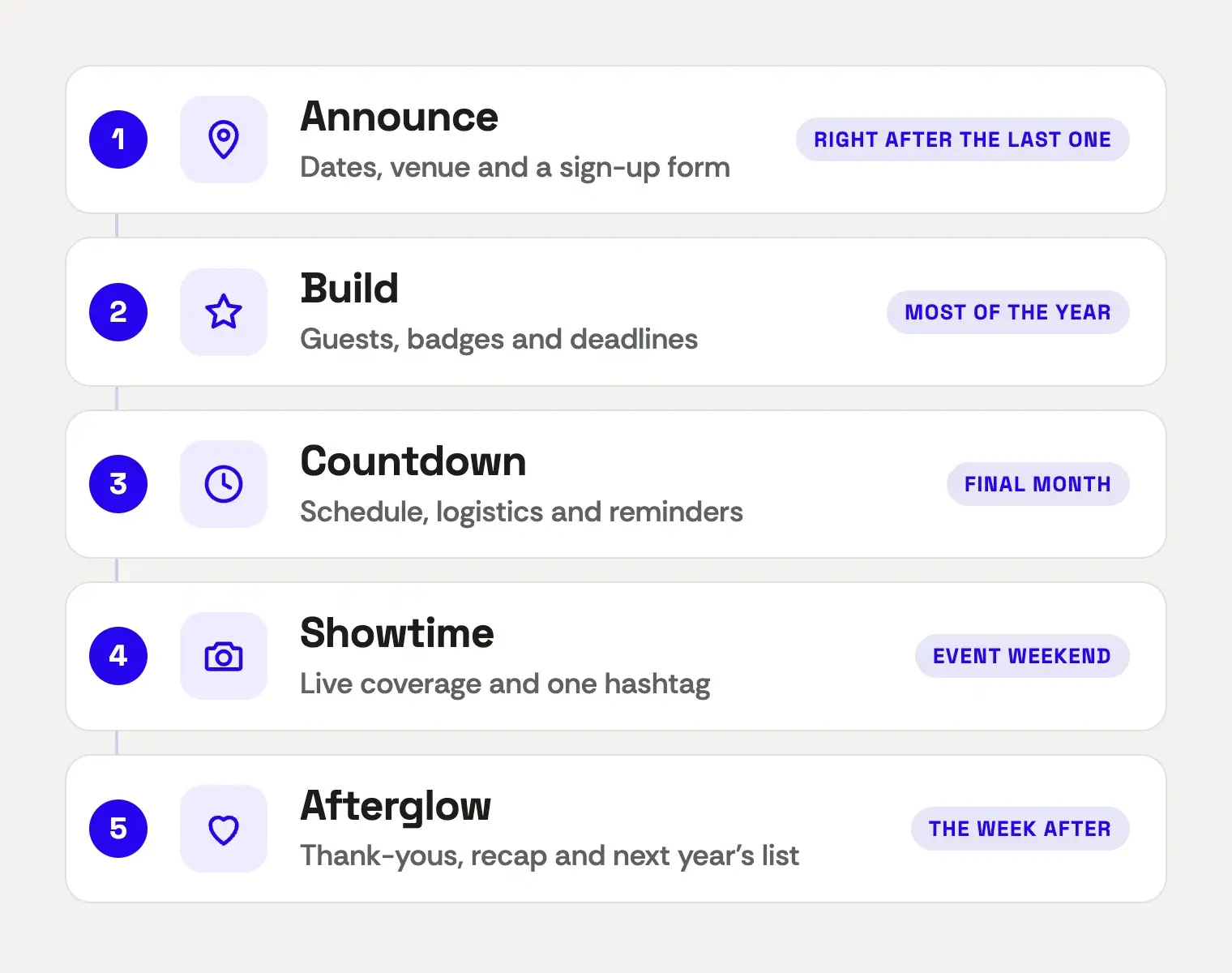
1. Announce: dates, venue and a sign-up form
As soon as the dates and venue are confirmed, update the website and tell your email list first. Then post the news everywhere else. Ideally, this happens at your closing ceremony or within a few days of it, while this year’s excitement is still fresh. Even a one-page site with the dates, the city and a sign-up form is enough to start.
2. Build: guests, badges and deadlines
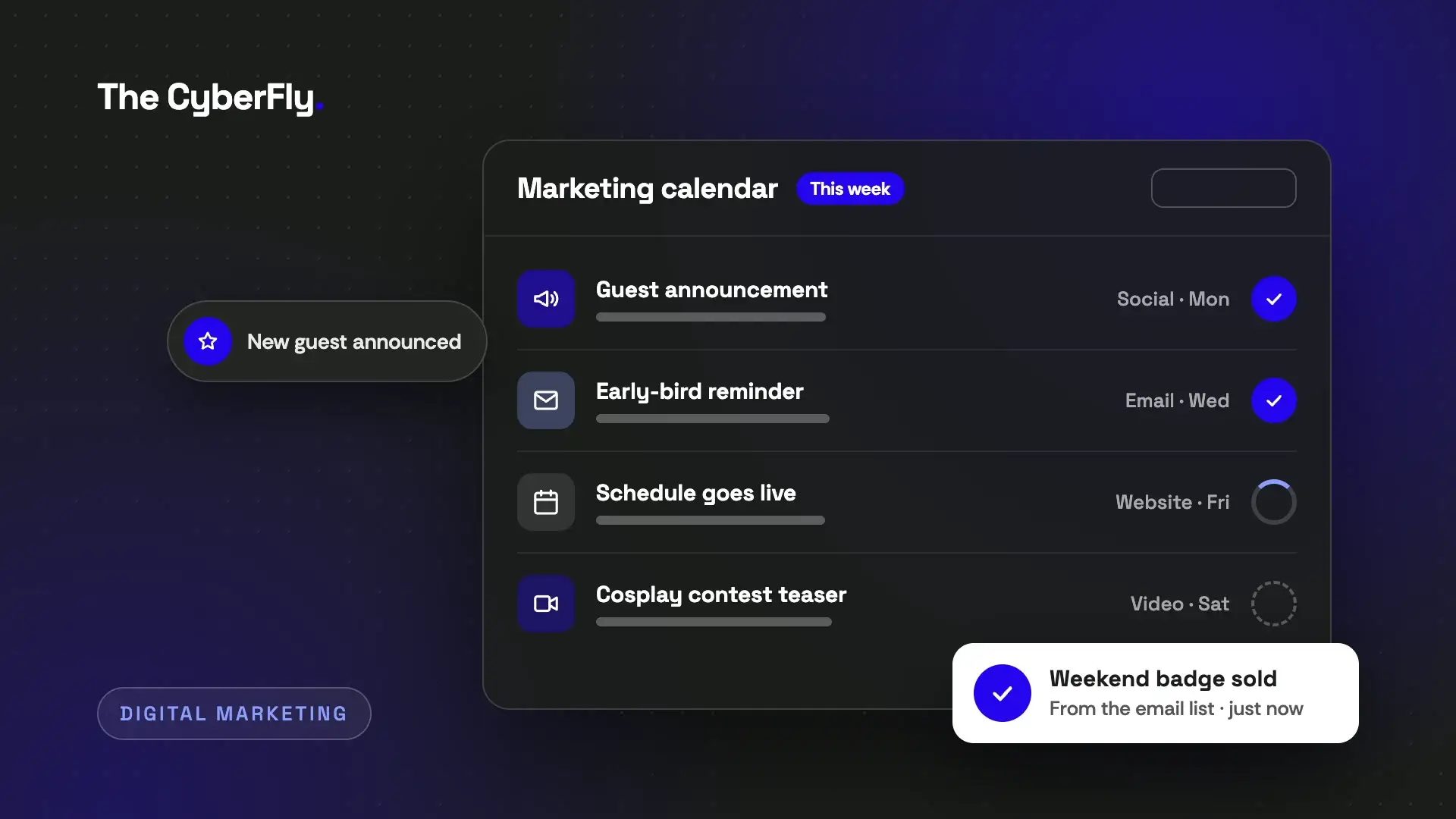
This is the longest phase, so pace yourself. Announce guests one at a time rather than all at once. That way, each guest gives you a reason to post, and their fans get a reason to pay attention. Meanwhile, open vendor, artist alley and panel applications with clear deadlines. Early-bird badges with a firm end date also give people a reason to buy now. A simple content calendar keeps all of this manageable, and one or two announcements a week is plenty.
3. Countdown: schedules, logistics and reminders
In the final month, people stop asking “Should I go?” and start asking “How do I do this?” So publish the schedule, the map, parking and hotel details, your cosplay and prop rules and your accessibility information. Then send a “know before you go” email in the week of the event.
This is also when your website is busiest. Therefore, test the site and the badge checkout well ahead of time. If you run WordPress, here’s how to update it safely before the rush.
4. Showtime: cover the weekend as it happens
During the convention, your attendees do much of the marketing for you. Pick one hashtag and put it on signs, badges and slides. Share photos and short clips through the day, and repost the best attendee content with credit. Also keep someone on your inbox and direct messages, because questions arrive fast. Finally, announce next year’s dates at the closing ceremony if you can.
5. Afterglow: thank, recap and reopen
The week after the event is the phase most teams skip. First, send a thank-you email with a short survey. Next, publish a photo gallery and a recap video while people are still talking about the weekend. Then open pre-registration or a “notify me” list for next year. Interest is rarely higher than it is right after a great weekend.
The best convention marketing channels for anime and cosplay events
You don’t need to be on every platform. Instead, choose two or three you can keep up with, and do them well.
- Short video. TikTok, Instagram Reels and YouTube Shorts suit cosplay well: transformations, craftsmanship close-ups, hall walk-throughs and guest shout-outs.
- Instagram and Facebook. Instagram is strong for photos and announcements. Facebook events and groups are still useful for local reach and for answering practical questions.
- Discord. A server gives your community a home between events. However, it needs clear rules and active moderators, so only start one if you can look after it.
- Convention listings. Add your event to calendars such as AnimeCons.com and your local tourism board’s event listings. They reach people who are already looking for conventions.
- Partners. Guests, vendors, artists, cosplay groups and local shops all have their own followers. Give them ready-made graphics, a short blurb and your hashtag, so sharing takes seconds.
- Search. Add event details that Google can read, so your dates and venue can appear right in the search results. Google’s event structured data guide explains how.
- Paid ads. A small budget goes furthest when it’s focused. For example, target people within driving distance who follow anime, gaming or cosplay, or people who visited your badge page but didn’t buy.
Let photos and video do the selling
Nothing sells a convention like proof of how the last one felt. A highlight video, a strong photo gallery and a handful of standout cosplay portraits can carry your marketing for months. So plan the coverage before the event: a shot list, a photographer and someone capturing vertical video for social media.
Cosplayers put enormous work into their costumes, so treat their images with care. Publish a clear photo policy, ask before you photograph or film someone, and credit cosplayers by their handle when you share. Also take an image down promptly if anyone asks. Many conventions have “cosplay is not consent” policies for good reason, and your marketing should follow the same spirit.
Event coverage is part of what I do. I offer event photography and video planned to feed your website and social channels for the year ahead.
How to measure your convention marketing
Followers and likes are nice, but badges sold is the number that matters. A few simple habits show you what’s working:
- Tag your links. Add tracking tags to the links in your emails, posts and ads, so your analytics can show where each sale came from. Google’s free Campaign URL Builder creates them for you.
- Track the actions that matter. Set up badge sales, email sign-ups and vendor applications as conversions in your analytics.
- Compare with last year. Look at where sales stood at the same number of weeks before the event, rather than at last month.
- Ask attendees. One survey question, “How did you hear about us?”, often reveals channels that analytics can’t see.
Review the numbers after each phase. Then do more of what worked and drop what didn’t.
Need a hand with your convention marketing?
You don’t have to do all of this at once. Start with the home base: a clear website and an email list. After that, add one channel at a time.
If you’d like help, I build websites and workflows for conventions and events, including badge links, sign-up forms and automatic emails. I can also train your team to keep everything up to date. Or get in touch and tell me about your event, with no pressure and no jargon.